Welcome. I'm Peter.I follow difficult problems until they become working systems.
My work has taken me from medical computer vision and satellite rendezvous to recruitment AI, equal-pay software, pharmaceutical patent research and live voice products. I move between fields because each one forces me to learn something new. What ties the work together is the urge to understand the problem properly, then build the thing that is missing.
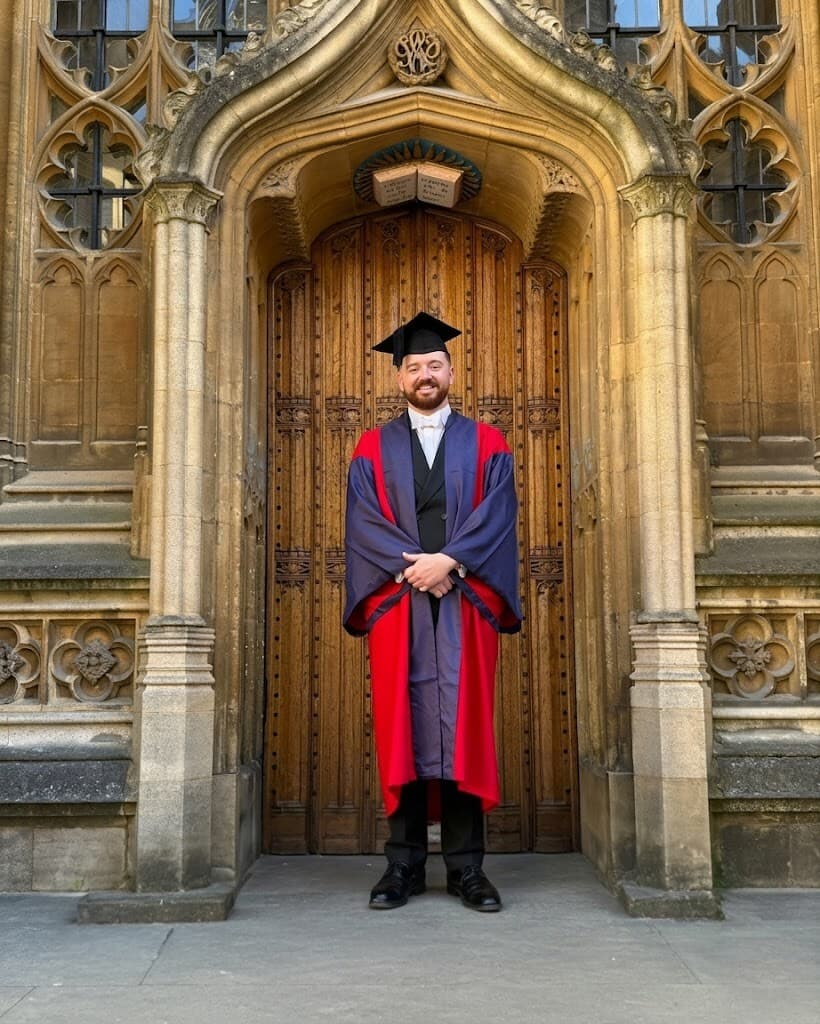
I chose physics because I loved hard problems. I wanted to understand the universe at its most fundamental level and learn a way of thinking that I could apply almost anywhere. During the degree, I became increasingly interested in statistical mechanics and computational physics. My master's work used molecular dynamics to investigate enhanced oil recovery.
The more computational the work became, the more interested I was in machine learning. At the same time, reading about complex systems and encountering medical work through nanoscience drew me towards medicine.
Oxford brought those interests together. I completed a DPhil in AI and Clinical Medicine at the Big Data Institute, supervised by Professor Cecilia Lindgren.
The research used AI to study mouse placental histology. I prepared the digitised whole-slide images and annotations, built the processing pipeline, found and classified cells, measured tissue and connected the output back to biological questions. By the end I was comfortable owning the whole research path, from raw images to a result that had to make biological sense.
After the DPhil, I chose a completely different kind of problem because I wanted to test my skills outside medical research and learn from people working in another field. Satellite rendezvous gave me that chance. I like finding my unknown unknowns and learning from people who see a problem differently.
I spent 2.5 years at Astroscale building computer vision for ELSA-M. Its target was an Eutelsat OneWeb satellite, and there were too few real orbital images to train the pose models directly. We relied on synthetic images, which made the gap between simulation and real camera data central to the work.
I built the pose-estimation system, investigated the gap between simulated and real images and developed AstroGAN myself within the wider ELSA-M team. The pose system had reached about four degrees of orientation error when I left. AstroGAN substantially reduced the measured differences between simulated and laboratory images on proxy measures, but I left before I could complete the downstream validation. That unresolved final test changed how I judged research: a result mattered only if it survived the constraints of the complete physical system.
While I was at Astroscale, GMB asked me to recommend a consultancy to help with its equal-pay work. Legal fees were high and the existing process was not working well. I looked at the available options and realised I could build something better.
One principle mattered from the start. The union should control its own data and systems instead of becoming dependent on a supplier it could not easily leave. That became Datamise. I co-founded the company around that principle. Datamise supports equal-pay claims involving Birmingham City Council and more than 40 other UK employers, including work in Leeds. Its use continues to grow across UK campaigns. Datamise has handled tens of thousands of claims and supported campaigns in which more than £300m in claims were resolved. GMB, legal teams, unions and claimants led those campaigns.
I personally built SettleMise from scratch, first as a Mac desktop application and then as a web application. Teams from GMB and Leigh Day used both versions live during the Birmingham negotiations, which covered roughly 6,000 claims. They could change assumptions and see the calculations and charts update while options were discussed. SettleMise is also used across equal-pay claims beyond Birmingham, and its use continues to grow.
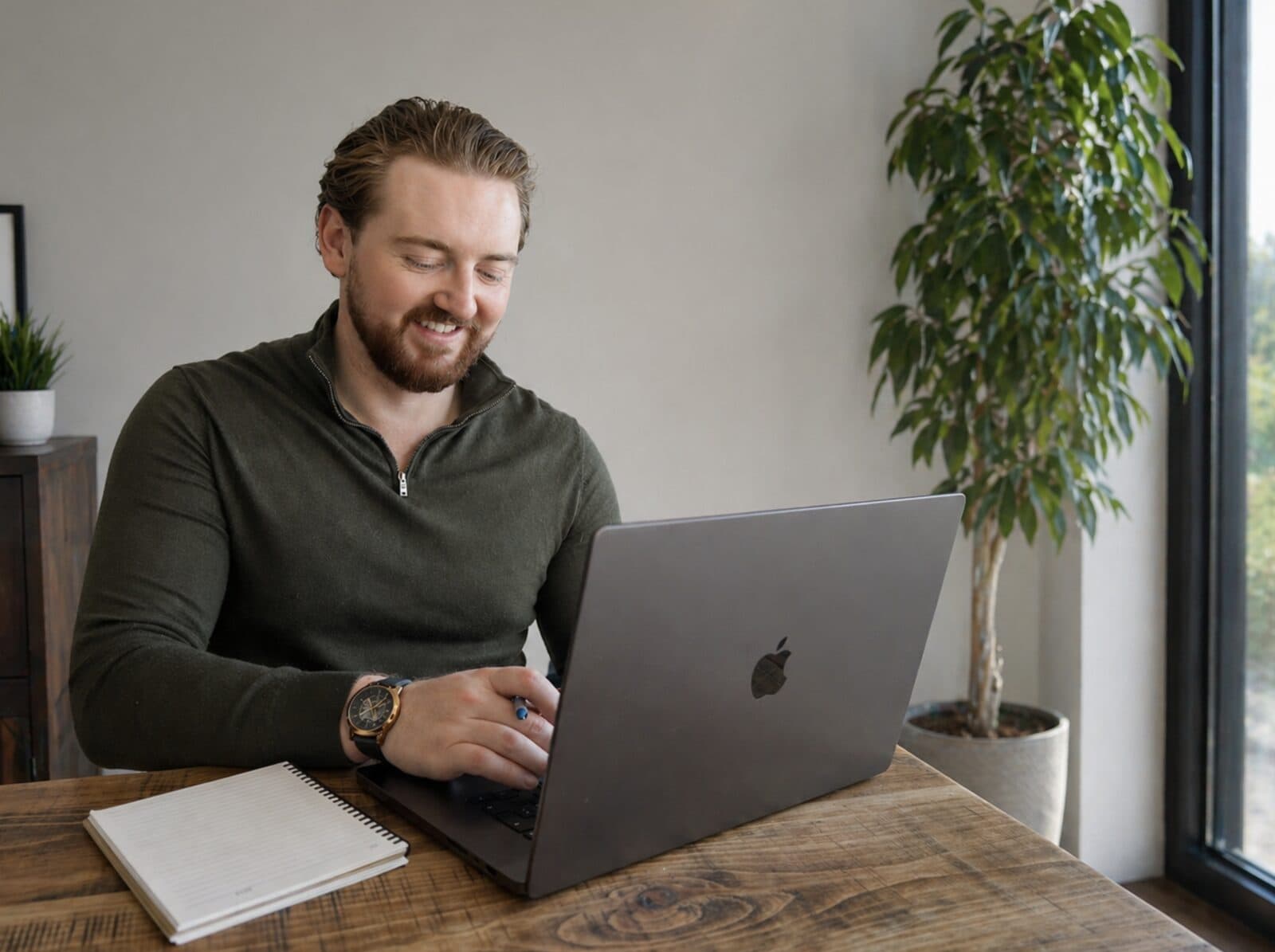
I was becoming increasingly interested in multi-agent systems and LLMs, and I wanted to move beyond computer vision as my main work. SThree offered me the freedom to explore and research in recruitment, a field that brought together agents, voice, chat and business analytics.
I joined as one of two founding AI engineers in a five-person group with the COO, Sales Director and Director of AI. Since then, I have helped conceive and build a platform that matches candidates to roles, analyses CVs, conducts phone interviews and produces shortlists for SThree recruiters or client hiring teams. I have worked mainly on the AI backend, system design and reliability, while contributing to wider technical decisions.
The platform is live in real hiring. The AI engineering team grew from 2 to 20. The dedicated platform team is now close to 100 people.
I have also analysed recruitment activity and placement data. Around 60% of the recruiters studied made no placement in a given month. Lower placement performance was associated with lower call and email activity. That relationship did not prove that activity alone caused the difference, but it helped us identify where the platform might support repetitive, high-volume work.
I built Aurum to test and improve the recruitment platform under controlled conditions. Its 25 agents generate synthetic candidates, CVs and simulated interviews so teams can probe bias, edge cases and regressions before relying on real applicants. Synthetic data can take development most of the way, but real applicant data is still needed to refine and validate the system.
That experience changed the questions I ask about multi-agent systems. The model matters, but so do orchestration, context and evaluation.
In 2025, I was the only solo entrant selected, alongside 24 companies, for the £5,000 CivTech 11.5 Exploration grant. I explored a human-led AI system for government impact assessments. The work concluded at the Exploration stage and was not deployed. While designing it, I began asking how much more elaborate orchestration adds when the model and tools are held still. I kept working on that question independently, and it became my sole-authored paper, Bounded Returns to Orchestration. It is now a public preprint on Zenodo and is under review at TMLR.
After CivTech, I became more serious about entrepreneurship. I saw a gap between AI research and what businesses knew how to build, and I wanted to close it.
Praviar began when someone working in pharmaceutical patent research brought me the problem. Legal text and chemical drawings have to be understood together, and I conceived, designed and built the product alone. I am its Founder and Sole Engineer. It is now in production and preparing to go to market. Owning the whole product let me move quickly, but it also made the boundary clear: Praviar can support specialist judgement, not replace it.
Conversico began when the clinical co-founders brought me the missed-call problem in dental practices. As CTO and Technical Founder, I built the website, Greeta application, operator dashboard, architecture and product code while they shaped the clinical workflows and requirements. It is now in production and in pilot across practices. We are developing a multi-agent approach to coordinate several processes inside dental practices.
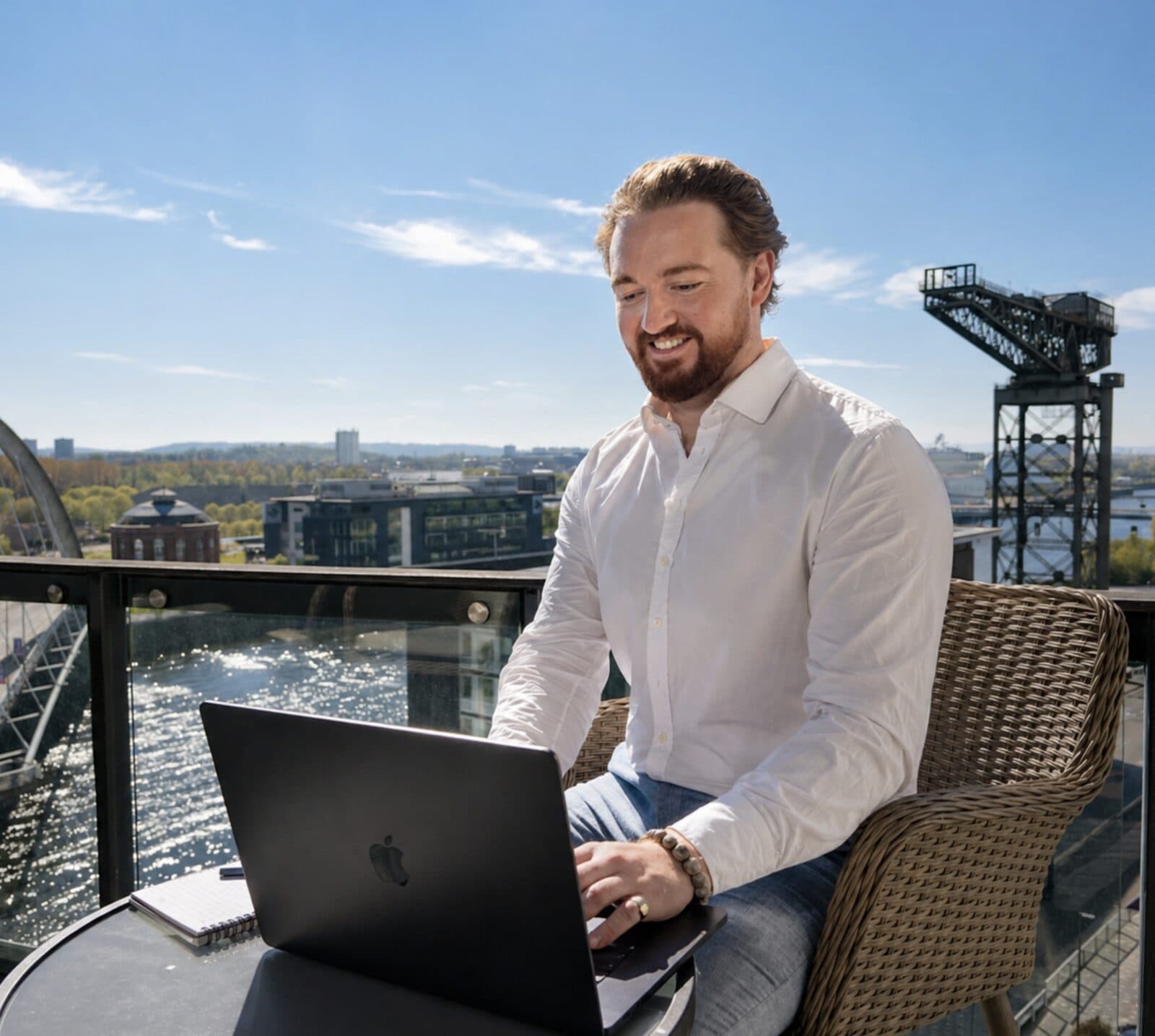
I am still following difficult problems.
Today that means building companies, researching how people can delegate to agents safely and consistently, and writing a book for late 2026.
I believe AI will be the biggest change in human history. I want to spend this part of it building useful systems and learning with people who take both the opportunity and the responsibility seriously. If that sounds like your kind of work, get in touch.